
“I’m always listening”: Supporting communication, recovery and independence
By: Simon Campbell, Specialist, Communications
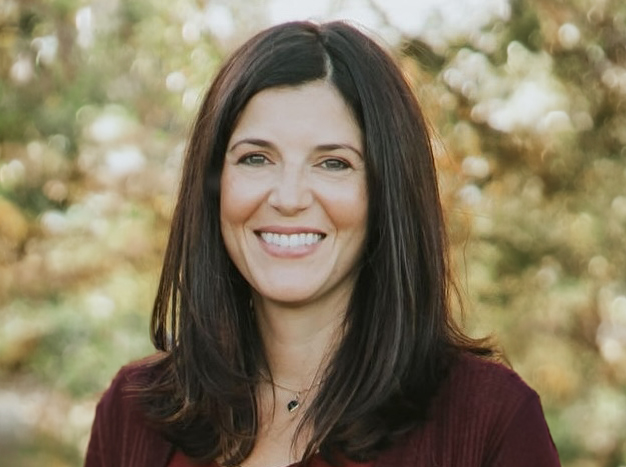
ST. CATHARINES, Ont. — When a conversation about communication therapy begins with a technical glitch, it feels almost too on the nose. “I’m always listening,” says speech-language pathologist Natalia Evans, as audio issues on my end, briefly interrupt the start of the interview.
The moment passes quickly. The sentiment lingers.
Communication, something most people move through effortlessly, is the foundation of Evans’ work as a Speech Language Pathologist for Bayshore HealthCare. For more than two decades, she has helped patients across Ontario rebuild that foundation after it has been disrupted by stroke, acquired brain injury or other life-altering events. Referrals often come through case managers, occupational therapists, or agencies such as the Workplace Safety and Insurance Board.
“These are patients who have been through traumatic experiences,” Evans says. “They’re working to rebuild skills that are fundamental to everyday life — speaking, understanding, expressing themselves.”
What that rebuilding looks like varies widely.
No two cases are the same, and Evans’ work spans a spectrum of communication challenges, from speech and language disorders to complex voice issues. The clinical work is precise, but the approach is necessarily personal.
Her role, she says, extends well beyond diagnosis and treatment plans. It involves understanding how each patient learns, what motivates them and how communication fits into their daily life.
“Ultimately, the goal is always to move the patient forward,” she says. “To help them communicate more effectively and confidently.”
Progress can be incremental. Recovery is often slow, sometimes frustrating, and almost always deeply personal. But the impact, when it comes, can be profound.
An ear for voice
If Evans’ work is rooted in science, it is shaped in part by art.
A singer-songwriter, she has long been immersed in music — an influence that naturally informs her focus on voice therapy.
“Music has always been part of my life,” she says. “It naturally connects to voice therapy.”
The connection is more than conceptual. Her background provides an intuitive understanding of vocal performance, control and strain; insights that translate directly into her clinical work, particularly with singers or professional voice users.
Asked what she listens to herself, Evans resists narrowing it down.
“It’s so hard to pick a favourite,” she says. “I really do love most genres, and what I listen to often depends on how I’m feeling in that moment.”
She pauses, then adds a qualifier.
“I do really enjoy creative covers or stripped-down acoustic versions of popular rock or pop songs.”
More than speech
At its core, speech-language pathology is not simply about speech.
It is about connection and the ability to express needs, share ideas, and participate in daily life. When that ability is disrupted, the effects extend far beyond communication.
For Evans, success is not measured in perfect articulation or textbook outcomes. It is measured in something more practical and more human.
For those working to find their voice again, having someone who is, as Evans puts it, “always listening,” can make all the difference.