
Changing perceptions while building a connected health-care journey
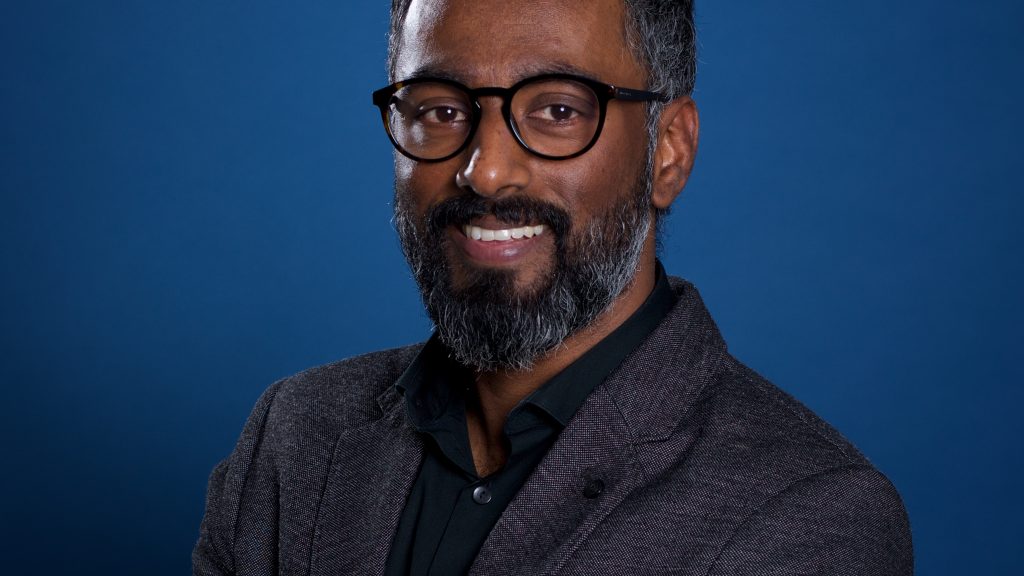
As Bayshore HealthCare’s Chief Digital Officer, Dheeraj Paul is focused on answering a simple question: How can digital tools make care better for patients and easier for the clinicians delivering it?
For Paul, the answer lies in his philosophy that technology is never the destination.
“It’s simply the vehicle,” he adds.
His vision extends beyond individual digital tools. Paul sees an opportunity for Bayshore HealthCare to play a larger role as a connected health-care partner, helping bridge the gaps between hospitals, patients, families and care teams as people move through the health-care system.
“We’re specialists in out-of-hospital care,” Paul said. “As soon as the patient leaves that institution, they’re in our care. That’s where the connected journey begins.”
As Chief Digital Officer, Paul leads Bayshore’s digital strategy, digital architecture, digital experiences, digital data and clinical innovation initiatives. He works across the organization to connect clinical expertise, data and digital capabilities in ways that support frontline teams and improve patient care.
That perspective reflects a broader shift in health care: the patient journey and experience does not end when someone leaves a hospital or begins a Patient Support Program at home. The opportunity is to connect information and insights across those transitions, so care teams can act earlier and more effectively.
“What we’re looking at is how the data we collect can augment care after patients leave the hospital,” Paul said.
From reporting to predicting
That philosophy is reshaping the Patient Support Program model.
Traditionally, Patient Support Program reporting has been largely retrospective. Teams can see what happened, whether a patient experienced a delay in their care, missed a dose or fell behind in therapy — and then respond.
The emerging opportunity is to move from retrospective reporting to predictive frontline enablement: using data and predictive intelligence to identify potential risks earlier, prioritize patients who may need additional support and give frontline teams the information they need to intervene before a delay occurs.
That is the thinking behind CareIQ, Bayshore’s predictive insights platform.
CareIQ is integrated into existing clinical workflows and uses patient data to identify individuals who may be at risk of a slow start to therapy or falling off therapy. Rather than requiring case managers to work through large caseloads without a forward-looking view, the platform provides risk segmentation, clinical context, and recommended actions within their existing workflow.
“We’re moving from telling you what happened to predicting what is likely to happen — and recommending what to do about it,” Paul said. “That’s the real transformation.”
The early results demonstrate what that shift can mean for Patient Support Program teams and the patients they support.
CareIQ: Key findings and impact
- Rapid adoption: CareIQ reached a 75 per cent frontline staff adoption rate within two months of launch, demonstrating that predictive insights can be integrated into existing workflows without creating another layer of technology for care teams.
- Proactive interventions: High-risk patients receive targeted support sooner, contributing to an approximately two-day reduction in average time-to-therapy and a nine per cent reduction in non-adherence to date.
- Empowered frontline teams: Dashboards provide immediate clinical context around each patient’s unique risk profile, helping teams prioritize their time, improve visibility into key performance indicators and make patient interactions more meaningful.
- Scalable personalization: The platform has scaled across thousands of patients and is positioned to expand across multiple therapeutic brands, demonstrating that personalized patient support can be delivered at scale within complex Patient Support Program environments.
For Paul, these results are important not simply because they demonstrate the capabilities of CareIQ, but because they signify a different way of thinking about the role of technology in patient support.
Building for what comes next
For Paul, the next stage is about using that foundation to help Bayshore anticipate, rather than simply react to the needs of patients and care teams.
“The hardest problems are rarely technical,” he said. “They’re about habits and trust.”
That is why he believes continuous improvement matters – the goal is to keep learning, testing and improving.
For Bayshore, that means looking beyond the traditional boundaries of home care and Patient Support Programs toward a more connected health-care ecosystem — one where data can follow the patient journey, predictive insights can support frontline decisions, and technology quietly enables better care.