
The medic, the mine and the goalie: How one physician assistant finds balance between medicine and family
By: Simon Campbell, Specialist, Communications
Somewhere between military deployments, mine sites and hockey arenas, Victor Piper-Speirs has spent nearly four decades mastering a skill few people ever become comfortable with: being the person everyone turns to when things go sideways.
He jokes that physician assistants working in remote occupational medicine need to be “comfortable with being uncomfortable.”
For him, it is less a job description than a career philosophy.
Piper-Speirs served in uniform long before he was supporting workers at remote industrial sites in Northern Ontario as a physician assistant with 24/7 Occupational and Emergency Medicine Solutions (OEMS), part of Bayshore HealthCare. He joined the Canadian Forces in 1987 as a reservist medic before transferring to the Regular Force in 1997 and eventually becoming a physician assistant — a role he held while serving across Canada and overseas working in military clinics, supporting aviation and dive medicine programs and deploying internationally, including a six-month tour in Iraq.
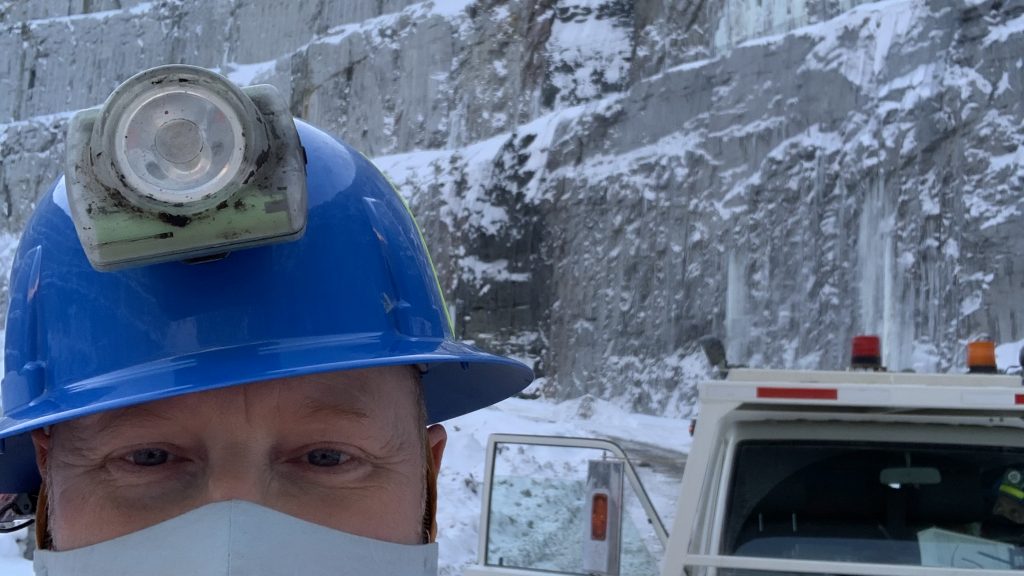
By the time he retired from the Forces in 2020, the timing felt right to focus on his next chapter. His experience led him to occupational medicine and eventually to OEMS, where he now supports workers in and around Geraldton, Ontario’s mining community. It’s an environment that shares similarities with military life. Both settings require healthcare providers to think independently, adapt quickly, and make decisions with limited resources. On some sites, weather or geography can delay access to higher levels of care. In fly-in communities and remote camps, medical teams often need to prepare for situations where support may be hours, or even days away.
“You need to be comfortable with your knowledge and your skills,” Piper-Speirs says. “You can phone a friend, but you can’t have the friend step in and take over.”
As a physician assistant, Piper-Speirs acts as an extension of a supervising physician by assessing patients, managing illnesses and injuries, making clinical decisions and escalating situations when additional expertise is needed.
Some days involve treating common illnesses that spread easily through shared work environments. Others require evaluating workplace injuries or determining whether someone can safely return to operating heavy equipment.
In occupational medicine, the job is not simply treating the injury in front of you — it is considering the bigger picture: the worker, their team, and their safety.
“It requires a 360-degree view of care”, he says.
That approach has made physician assistants increasingly valuable in remote and underserved settings, where healthcare access can be limited. Piper-Spiers recalls helping a worker from Nunavut who had suffered a serious dental injury after a snowmobile accident. Months had passed without treatment because dental teams only visited the individual’s home community every few weeks, and each time they arrived, the worker was deployed away from home.
Piper-Speirs worked with territorial healthcare officials to coordinate care, arrange transportation, and ensure the worker was home to receive the care he needed.
While much of Piper-Spiers career has been spent in high-pressure environments, his role shifts dramatically when he returns home and turns into “an old guy with young kids.”
With a nine-year-old son and daughter heading into their teen years, his world at home becomes less about clinical assessments and emergency planning and more about hockey practices, figure skating and school pickups.
Still, his son is a goalie which naturally, prompts another comparison.
The physician assistant working independently at a remote site is not unlike the goalie on a hockey team — part of a larger system but standing alone when the pressure arrives.